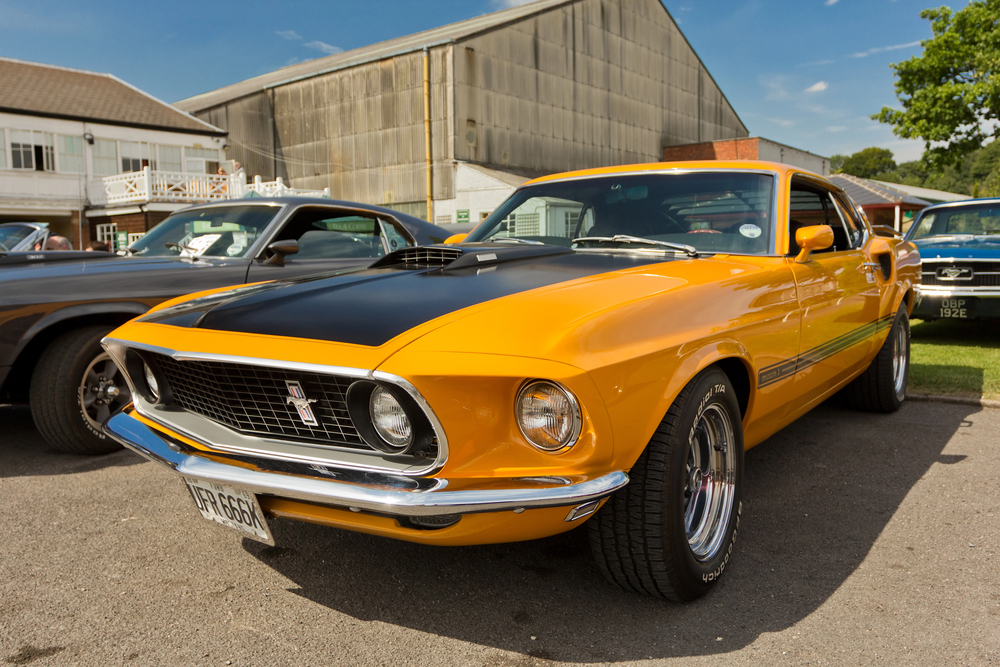
The Ford GT90 was a beast that could never be tamed for everyday roads, a machine so radical it redefined what a concept car could be. Born in the 1990s as a spiritual successor to the legendary GT40, the GT90 was never destined for public streets. Its design, performance, and tech pushed boundaries far beyond regulatory limits, making it a forbidden fantasy for car lovers. The car’s sheer presence and capabilities left a lasting impression on the auto world. Here are 10 jaw-dropping facts about the Ford supercar that couldn’t be street legal.
Overpowered Engine

The Ford Supercar’s engine was a beast, designed to offer extreme performance that outclassed most production cars. Its V8 engine was capable of producing insane horsepower numbers, providing a top-tier driving experience. However, this level of power was simply too much for legal road use in many regions, as it far exceeded emission and safety regulations.
Cutting-Edge Aerodynamics

With its aggressive aerodynamic design, the Ford Supercar was all about speed and handling. Its low, sleek body and rear-mounted wings helped reduce drag and increase downforce, providing exceptional stability at high speeds. Unfortunately, some of these features violated regulations for street-legal cars, as the extreme downforce could create safety concerns when not used on a racetrack.
Carbon Fiber Structure

One of the key aspects of the Ford Supercar’s design was its extensive use of carbon fiber, making it incredibly lightweight yet exceptionally strong. This allowed the car to maintain high performance without compromising on durability. However, some of the materials used in the car’s body construction were not approved for street use, as they didn’t meet certain crash safety standards for consumer vehicles.
Extreme Tire Requirements

To handle the immense power and speed of the Ford Supercar, specialized tires were required, ones that were capable of withstanding the tremendous forces exerted during high-speed driving. While perfect for racing conditions, these tires didn’t meet street tire regulations, making it difficult to get the car approved for regular road use. The tire limitations posed another hurdle in making the car street-legal.
Related: 15 Cruise Control Mistakes That Put You at Risk on the Highway
Unmatched Speed Potential

The raw speed of the Ford Supercar was its most incredible feature, but it also made it dangerous on regular roads. Its acceleration and top speed, unmatched by most other cars, posed a safety hazard, particularly in city driving conditions. While its speed was a marvel, it was also a factor that contributed to its inability to become street-legal, as it didn’t align with safety requirements.
Related: 13 Hidden Dangers on the Road That Most Drivers Ignore
Environmental Impact

Given its massive engine and turbocharged performance, the Ford Supercar’s environmental impact was another major factor in its inability to be made street-legal. The car emitted far more pollutants than typical street vehicles, which caused issues in meeting global emissions standards. This environmental concern kept it from achieving approval for use as a street-legal vehicle.
Related: Top 12 Car Technologies That Will Be Standard in Every Vehicle by 2030
Incompatible with Public Roads

The car’s sheer performance capabilities, coupled with its specialized design, made it incompatible with many public roadways. Its acceleration, top speed, and handling could not be fully utilized on the average road, making it less practical as a street car. This also meant that driving the Ford Supercar on public roads could be dangerous for both the driver and other road users.
Related: 13 Reasons Why Compact SUVs Still a Good Choice for City Living
High Maintenance Costs

The Ford Supercar’s complex systems and specialized components resulted in prohibitively high maintenance costs. While enthusiasts and collectors might relish the chance to own such a car, the cost of repairs and parts made it unfeasible for regular drivers. This made it impractical for mass-market production as a street-legal vehicle.
Related: Buying Your First Car? Read These 15 FAQs Before You Sign
Limited Visibility

The Ford Supercar’s aggressive design, while breathtaking, compromised visibility for the driver. Its low seating position and limited rear visibility made it difficult to navigate through traffic and had the potential to be dangerous on the roads. This posed a significant issue for street legality, as cars are required to meet specific visibility standards for safe driving.
Related: New or Used? 15 Crucial Car Buying FAQs Uncovered!
Futuristic Design

The car’s cutting-edge, futuristic design was one of its most remarkable features, but also one of the biggest obstacles to making it street-legal. Its sharp lines, dramatic curves, and aggressive stance were perfect for the racetrack, but the extreme design elements didn’t meet certain pedestrian safety standards. This made it difficult for the car to be approved for use in normal driving conditions.
Related: Is Your Car in Trouble? 15 Warning Signs and Fixes
These facts highlight just how extreme and over-engineered the Ford Supercar was, pushing the limits of what was considered possible in automotive design. While it may have never made it to the street, the car’s groundbreaking features remain a testament to Ford’s bold vision. In the end, the Ford Supercar is a symbol of what happens when ambition meets the realities of road regulations, leaving behind a legacy of untapped potential.
Disclaimer: This list is solely the author’s opinion based on research and publicly available information.
14 Mid-Engine Sports Cars You Can Actually Afford In 2025

Mid-engine sports cars offer a thrilling blend of balance, agility, and performance, often reserved for high-end exotics. However, there are still plenty of affordable options for enthusiasts who crave that perfect weight distribution and razor-sharp handling without breaking the bank. Here are 14 mid-engine sports cars that remain within reach in 2025.
Read it here: 14 Mid-Engine Sports Cars You Can Actually Afford In 2025
15 Fords That Sparked Outrage And You Won’t Believe Why

Ford has built some of the most iconic cars in automotive history, but not every model was met with applause. Some sparked controversy over design choices, performance failures, or shocking marketing decisions that left fans fuming. From questionable engineering to bizarre styling, these 15 Fords caused outrage and the reasons will blow your mind!
Read it here: 15 Fords That Sparked Outrage And You Won’t Believe Why
12 Amazing Cars Built By Ford That Weren’t Fords

Ford has played a crucial role in automotive history, not just through its own legendary models but also by engineering, manufacturing, or providing key components for other brands. From high-performance supercars to rugged off-roaders and luxurious grand tourers, these vehicles prove Ford’s influence extends far beyond its own badge, shaping global automotive excellence, innovation, performance, reliability, and engineering mastery.
Read it here: 12 Amazing Cars Built By Ford That Weren’t Fords
You’ll love these related posts:
- 14 Cars That Make More Sense to Buy Pre-Owned
- 15 Nostalgic ’80s & ’90s Cars That Are Making A Comeback
- 12 Cheap Electric Cars That Won’t Leave You Stranded
- 15 Cars That Defined Boomer Childhoods and Are Now Ultimate Collectibles
- These 12 Cars Are Appreciating Like Fine Wine – And Why You Should Consider Buying Now